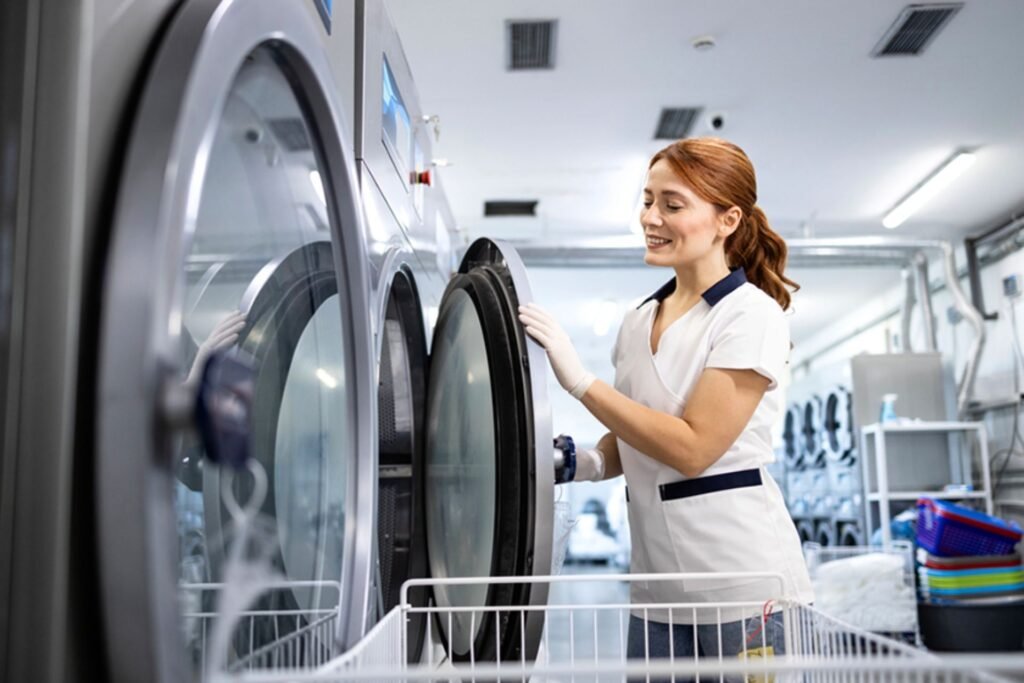
Hot Washing Uniform Fabric Malaysia – Best Fabrics for Industrial & Commercial Laundry
High-Temperature Washable Fabrics Designed for Hygiene, Durability and Professional Workwear.
Uniform Fabrics That Can Withstand Frequent Hot Water Washing
Not every uniform fabric is designed to withstand high-temperature washing.
For businesses operating in hotels, hospitals, restaurants, food production facilities and industrial environments, uniform cleaning is more demanding than ordinary household laundry.
Employees may change uniforms daily, while garments are repeatedly exposed to commercial detergents, mechanical agitation, hot water, industrial tumble dryers and pressing equipment.
Choosing unsuitable fabrics can result in excessive shrinkage, faded colours, damaged logos, weakened seams and uniforms that quickly lose their professional appearance.
At Uni-Cloth Malaysia, we recognise the importance of selecting uniform fabrics according to their intended working environment and laundry requirements.
For organisations requiring regular hot water washing, selecting the correct industrial laundry uniform fabric helps maintain garment performance, appearance and service life.
What Is Hot Washing Uniform Fabric?
Hot washing uniform fabric refers to textile materials designed or qualified to withstand washing in elevated water temperatures without unacceptable changes to their appearance, dimensions or performance.
Unlike ordinary fashion fabrics, industrial laundry fabrics are often evaluated for repeated washing cycles involving heat, detergents, agitation and commercial drying processes.
Common washing temperature categories include:
| Water Temperature | Common Application |
|---|---|
| 40°C | Standard uniform cleaning and delicate branded garments |
| 60°C | Hot washing for suitable workwear, hospitality and healthcare textiles |
| 75°C | Selected industrial laundering processes |
| 85°C | Intensive industrial laundering of qualified fabrics |
| 90–95°C | Specialised high-temperature laundering of explicitly approved textiles |
These temperatures are not interchangeable. The washing temperature, holding time, detergent formulation and finishing process must match the garment’s care instructions and the facility’s cleaning requirements.
Best Types of Fabric for Hot Water Washing
1. Polyester Cotton Fabric (65% Polyester / 35% Cotton)
One of the most practical choices for industrial washable uniforms.
Polyester cotton, commonly called polycotton or TC fabric, combines the strength and dimensional stability of polyester with the comfort and absorbency of cotton.
The 65/35 polyester-cotton blend is widely used in professional workwear because it provides a balance between durability, comfort and ease of maintenance.
Key advantages include:
Good resistance to repeated mechanical washing
Better dimensional stability than many untreated cotton fabrics
Reduced creasing compared with pure cotton
Practical drying and maintenance
Suitable fabric constructions for shirts, jackets, trousers, aprons and coveralls
Availability of specially engineered industrial-laundry grades
Certain industrial-laundry-qualified polycotton fabrics are designed for washing processes reaching 75°C or 85°C. This capability must be verified for the particular fabric and finished garment.
Recommended industries: Hotels, restaurants, factories, maintenance departments, commercial laundries, logistics and service uniforms.
2. Polyester Cotton Fabric (50% Polyester / 50% Cotton)
A balanced polyester-cotton blend can provide a comfortable alternative for employees who require both durability and improved cotton content.
A 50/50 composition is often considered for workwear, chef jackets, aprons and other garments requiring regular washing.
Its advantages include:
A balanced combination of cotton comfort and polyester durability
Good everyday wearability
Suitable for many woven uniform designs
Availability of specialised industrial washable constructions
However, not every 50/50 fabric is suitable for 75°C or 85°C washing. Industrial laundering approval depends on the individual fabric’s construction, finishing and test results.
Recommended industries: Hospitality, food service, housekeeping and general workwear.
3. 100% Cotton Uniform Fabric
Cotton is naturally absorbent and commonly used for workwear, chef clothing and other professional garments.
Some pre-shrunk or specially finished cotton textiles are suitable for intensive hot water washing, especially when supplied in white or other colourways approved for high-temperature laundering.
Benefits include:
Comfortable natural fibre construction
Good moisture absorption
A familiar option for chef coats and traditional uniforms
Availability of fabrics designed for high-temperature washing
The main consideration is shrinkage. Untreated cotton can shrink, crease and lose colour during repeated hot washing.
Businesses requiring cotton uniforms should prioritise fabrics with verified dimensional stability and suitable colourfastness.
Recommended industries: Professional kitchens, healthcare, food preparation and selected hospitality operations.
4. Industrial-Grade Polyester Uniform Fabric
Polyester is known for its strength, quick drying and wrinkle resistance.
It is commonly used for corporate uniforms, operational garments, sportswear and technical workwear.
However, ordinary polyester fabric should not automatically be considered suitable for extreme hot washing.
Certain engineered polyester products may tolerate demanding laundry processes, but many standard polyester garments require lower washing and drying temperatures.
Heat can affect the fabric’s surface appearance, garment finishing, printed logos and decorative components.
Recommended industries: Technical workwear, lightweight uniforms and operational garments where the supplier confirms compatible washing procedures.
5. Specialised Industrial Laundry Workwear Fabric
For organisations operating centralised commercial laundries, selecting industrial-laundry-qualified fabrics is often more important than choosing a particular fibre percentage.
These fabrics are engineered and evaluated for a combination of properties such as:
Repeated washing durability
Dimensional stability
Colourfastness
Resistance to pilling and surface deterioration
Appearance after industrial finishing
Compatibility with commercial detergents
Retention of required functional properties
They may be constructed using polyester-cotton, cotton-rich or other specially engineered textile systems.
For demanding applications, request laboratory test reports and actual commercial laundry trial results before placing a large uniform order.
Hot Washing Fabric for Different Industries
Hotel & Hospitality Uniform Fabric
Hotels operate departments with very different uniform requirements.
Housekeeping staff require comfortable clothing suitable for regular cleaning, while kitchen teams need durable garments that can withstand frequent washing and exposure to food-related stains.
Waiters, receptionists and concierge employees may wear more decorative garments that require gentler laundering.
Recommended considerations include:
Industrial-grade polyester-cotton for housekeeping clothing
Approved cotton or polycotton fabrics for chef coats
Strong woven fabrics for aprons
Colourfast materials for repeatedly washed service garments
Wash-resistant embroidery and compatible garment accessories
A single fabric specification should not automatically be applied to every hotel department.
Hospital & Healthcare Uniform Fabric
Healthcare uniforms may be subjected to regulated or facility-specific laundering procedures.
Suitable fabrics should be selected according to hygiene protocols, required wash temperatures, chemical compatibility and garment performance.
Industrial-grade polycotton and selected cotton fabrics may be appropriate for scrubs, coats and general staff uniforms when they meet the required specifications.
For healthcare applications, hot washing alone is not proof of disinfection.
A validated laundering process must account for the temperature maintained, washing duration, detergent chemistry and handling of cleaned garments.
Restaurant, Catering & Commercial Kitchen Uniform Fabric
Food service uniforms are frequently exposed to food stains, oils, moisture and demanding working conditions.
Chef coats, kitchen trousers and aprons should be selected with both comfort and intensive laundering requirements in mind.
Industrial-grade polycotton and suitable cotton constructions are practical materials to evaluate.
White chef uniforms may allow more intensive cleaning options when the specific fabric and garment care specifications permit them.
For restaurant uniforms with coloured piping, silicone logos or decorative embroidery, washing compatibility should be tested before approving high-temperature laundry cycles.
Factory & Industrial Workwear Fabric
Industrial workwear must balance durability, employee comfort and laundering performance.
Technical employees may require uniforms that withstand oils, dirt, abrasion and repeated commercial cleaning.
Common fabric options include woven polyester-cotton twill, durable canvas, ripstop and specially engineered protective textiles.
For flame-resistant, high-visibility or chemical-protective workwear, the entire garment and its protective properties must be assessed according to the applicable standards.
A fabric’s ability to withstand hot washing does not automatically mean that it remains compliant with protective clothing requirements after laundering.
Understanding ISO 15797 for Industrial Laundry Fabrics
When selecting industrial washable uniform fabrics, buyers may encounter ISO 15797, an international standard for evaluating workwear intended for industrial laundering.
ISO 15797 specifies laboratory washing and finishing procedures that simulate industrial laundry conditions.
The standard helps evaluate characteristics such as dimensional stability, colour performance, creasing, pilling and general garment appearance.
It is important to understand that ISO 15797 is a testing standard, not a universal instruction to wash every garment at a particular temperature.
A fabric must be assessed using procedures appropriate to its composition and intended application.
Companies purchasing uniforms for commercial laundries should request relevant test reports rather than relying only on general descriptions such as “washable”, “easy care” or “industrial quality”.
How to Select the Right Fabric for Industrial Hot Washing
The most suitable uniform fabric is determined by more than the maximum washing temperature.
Before confirming fabric selection, companies should consider six important requirements.
1. Washing Temperature
Confirm whether uniforms will be washed at 60°C, 75°C, 85°C or another temperature. The exact approved maximum must be documented.
2. Repeated Washing Cycles
A fabric that survives one hot wash may perform differently after dozens of industrial washing and drying cycles.
3. Dimensional Stability
Excessive shrinkage can affect garment sizing, employee comfort and the professional appearance of uniforms.
4. Colourfastness
Corporate uniforms should maintain a consistent colour appearance despite repeated washing and exposure to laundry chemicals.
5. Drying & Finishing Compatibility
Industrial tumble drying, pressing and tunnel finishing may introduce additional stress that differs from the washing stage.
6. Logo & Accessory Durability
Embroidery threads, printed logos, reflective materials, zippers, labels and decorative trims must also tolerate the selected laundering process.
The finished uniform should be evaluated as a complete garment rather than considering fabric performance alone.
Why Ordinary Corporate Uniform Fabrics May Fail During Hot Washing
Many everyday corporate uniforms are selected mainly for softness, appearance, stretch or wrinkle resistance.
These characteristics do not automatically guarantee industrial laundry performance.
Common problems include:
Shrinkage after high-temperature washing
Colour fading and bleeding
Damaged heat-transfer logos
Distortion of stretch fibres
Deformation of collars and waistbands
Reduced durability of fabric finishes
Creasing, seam puckering and surface deterioration
For businesses using commercial laundry services, it is more economical to choose an appropriate fabric specification before garment production than to replace unsuitable uniforms repeatedly.
Uni-Cloth Malaysia – Selecting Uniform Fabric for Every Working Environment
Choosing the right uniform involves understanding how employees work, how often their garments are cleaned and which washing processes are used.
Uni-Cloth focuses on corporate clothing and workwear solutions for businesses with different operational needs.
For projects requiring hot washing uniform fabric, relevant specifications may include polyester-cotton composition, fabric weight, woven construction, colour requirements, shrinkage performance and commercial laundry compatibility.
The selected fabric should provide a practical balance between employee comfort, durability, appearance and maintenance costs.
For hotels, healthcare providers, restaurants, factories and commercial laundry operators, uniform planning should begin with the actual laundry process—not simply the garment design.
Frequently Asked Questions About Hot Washing Uniform Fabric
What is the best fabric for hot water washing uniforms?
Industrial-laundry-grade 65% polyester / 35% cotton is one of the leading choices because it combines durability, comfort and dimensional stability. The approved temperature depends on the manufacturer’s specifications.
Can polyester cotton uniforms be washed at 90°C?
Not all polyester-cotton fabrics are suitable for 90°C washing. Some specialised industrial fabrics are qualified for demanding wash cycles, but a 90°C process must be explicitly supported by the fabric and garment care specifications.
Can cotton uniforms withstand 95°C washing?
Certain white, pre-shrunk cotton textiles may be approved for washing at 95°C. Ordinary cotton fabrics should not be assumed suitable because repeated exposure to high temperatures can cause shrinkage and deterioration.
Is 60°C washing suitable for hotel uniforms?
Many hotel uniforms can be designed for 60°C laundering, provided the fabric and garment components are compatible. Hotels should select their cleaning processes according to garment types, soil levels and laundry requirements.
What fabric is suitable for hospital uniforms?
Industrial-grade polycotton and selected cotton fabrics are commonly considered for healthcare clothing. The final selection must meet the healthcare facility’s validated laundering and hygiene requirements.
Does hot water washing disinfect uniforms?
A validated hot-water laundering process can contribute to textile disinfection, but temperature alone is insufficient to demonstrate hygienic performance. Washing time, detergent chemistry, mechanical action and contamination control also matter.
How can companies prevent uniforms from shrinking during hot washing?
Choose fabrics with verified dimensional stability, use approved washing and drying procedures, and test finished garments through repeated laundry cycles before bulk production.
What does industrially washable fabric mean?
Industrially washable fabric is material designed or evaluated to withstand commercial laundry conditions, which may include intensive washing, mechanical action, detergents and industrial drying or finishing.
